





Whoa! I get why browser-wallet fatigue sets in for DeFi users. My instinct said the wrong wallet will cost you both time and funds. Initially I thought most extensions were interchangeable, but after months of switching between wallets and stressing over gas fees I realized nuanced UX decisions and security modeling actually matter a ton, especially when you manage multiple chains. Here’s the thing.
Seriously? Yes—Rabby stands out in that crowded space. I’m biased, but it fixed a few small annoyances that bugged me for months. On one hand, it’s a lightweight extension that loads fast and isolates wallet sessions reliably; though actually, the way it handles approvals and dApp connections reduces accidental approvals in a way I hadn’t expected, and that saved me from a sloppy swap once. Somethin’ about the interface just feels calmer.
Hmm… Security is the obvious lead here. Rabby uses per-site permissions and granular approvals so you can review each allowance line-by-line instead of blindly approving ERC-20 infinite approvals. That matters because infinite approvals are the single most common road to loss for non-experts. My gut said I’d trade convenience for control, but actually the wallet keeps both.
Really? Yep — it supports multiple accounts, chain switching, and hardware integrations. I connected a Ledger and didn’t need to jump through hoops or re-enter keys. Initially I thought hardware support would be clunky, but then I found the flow intuitive and robust when signing transactions across Polygon, Optimism, and mainnet; that cross-chain fluency is a genuine time-saver for builders and traders alike. A tiny gripe: network list could be reordered, but that’s nitpicky.
Whoa! Rabby’s approval management is more transparent than many peers. You can set spending caps per token and revoke allowances from the same panel where you review dApp permissions, which is very practical. Sometimes revokes take a little on-chain time, though—the blockchain is slow sometimes… But having the option in one place makes it feel less risky.
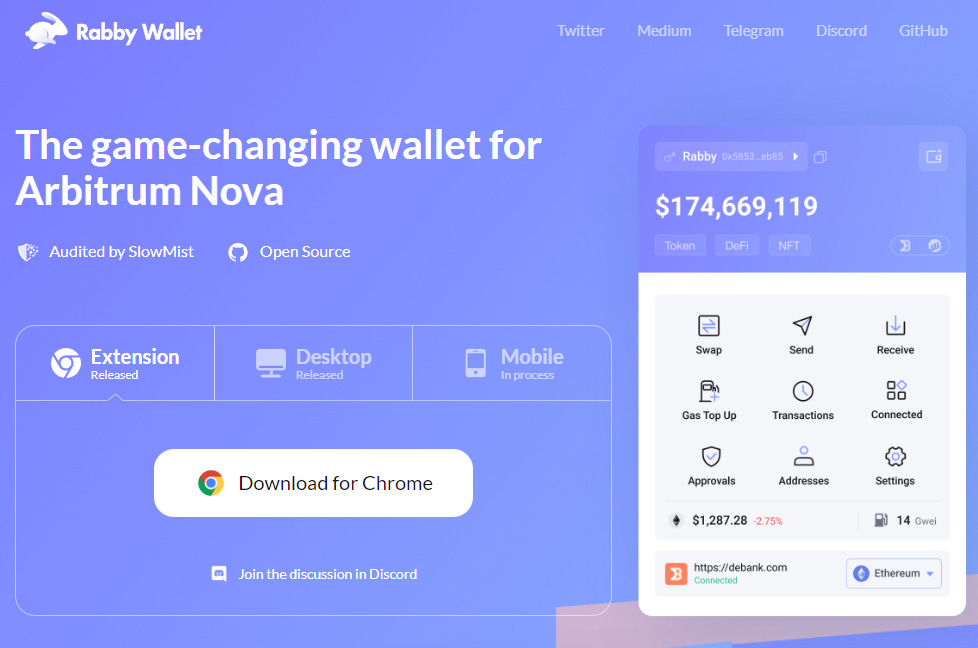
Why I recommend trying Rabby
Okay, so check this out—Adding Rabby is simple and quick for most browsers. You can start from this download page, which walks you through Chrome and Brave installs and offers tips for hardware integration: here. Be cautious to install only from this source to avoid copycat extensions. Always verify the extension ID and double-check the permissions during setup.
Here’s the thing. It creates isolated contexts for different dApps so you can limit cross-site tracking. That isolation reduces the blast radius if a malicious site tries to fingerprint your session, and it’s a subtle protection people underestimate. On one hand privacy like this isn’t a silver bullet, but on the other hand it stacks with hardware keys to give real defense-in-depth. I tried it on a few defi aggregators and noticed fewer popups asking for blanket approvals.
I’ll be honest—Even with a good wallet, user behavior matters. Use a hardware wallet for big balances, split funds across accounts, and set token allowances conservatively. I keep a small hot-wallet for daily swaps and a Ledger for long-term holdings, which feels safer for me. Your setup might differ, though.
Something felt off about batching at first… Rabby shows a preview of gas and allows you to prioritize speed or cost. Transaction simulation helps you see if a swap might revert due to slippage or low liquidity, and that kind of preflight check cuts down on lost gas fees. On one hand simulations aren’t perfect, though actually they reduce surprise failures more than you’d expect. That alone makes it worth trying.
Wow! I left thinking Rabby isn’t perfect, but it’s thoughtful. It balances granular control with a usable UI, supports hardware keys, and makes approvals clearer—three practical wins for anyone deep in DeFi. I’m not 100% sure it’s the best for every workflow, and some power users may want more customization, but most users will find the default posture safer than many alternatives. Give it a try and judge for yourself.
FAQ
Is Rabby free to use?
Yes — the extension itself is free. Of course you still pay on-chain gas fees when interacting with networks, and any third-party services you use (bridges, swaps) may have fees.
Can I use Rabby with a Ledger?
Absolutely. Ledger integration works well and keeps private keys offline while letting you approve transactions through the hardware device, which is how I protect larger balances.
How does Rabby help prevent scams?
Rabby emphasizes granular approvals, isolated sessions, and clearer permission prompts. Those features don’t stop every scam, but they reduce the common accidental-approval vectors that lead to quick losses.